The first double bassist ever to win Guildhall’s Gold Medal, Strahinja Mitrović is part of a new generation expanding what his instrument can be.
Artist Playbook caught up with the rising Serbian musician to talk about defying expectations and charting new territory.
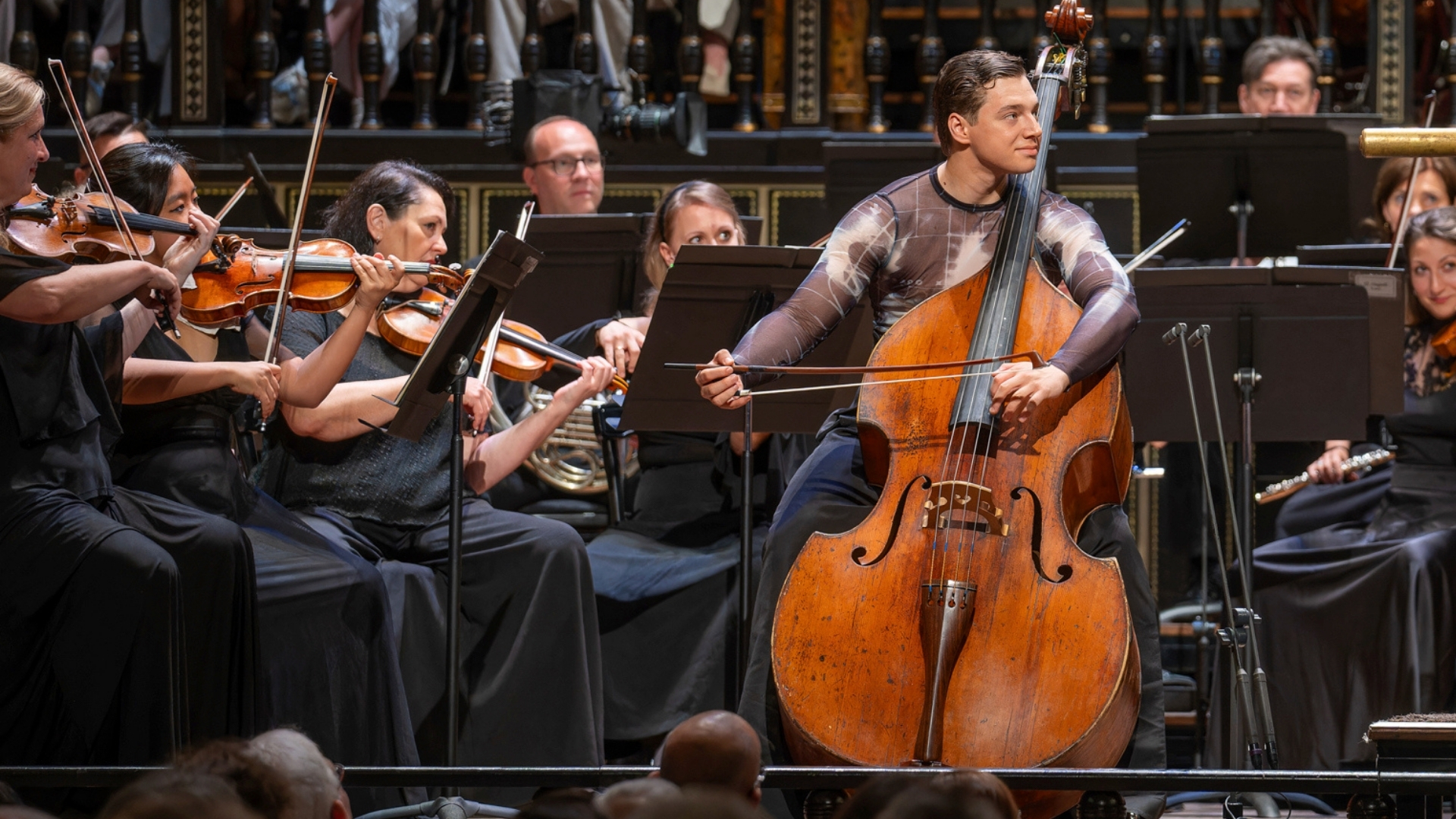
“Starting late meant I wasn’t as conditioned by what was considered conventional.”
You came to serious musical training later than many of your peers. What did catching up teach you?
Starting late gave me a certain fearlessness. Catching up required enormous discipline because many people around me had years of training, I didn’t. But it also meant I wasn’t as conditioned by what was considered conventional. I think that freedom shaped the musician I am today.
You became the first double bassist to win Guildhall’s Gold Medal. How did that affect your motivation?
Winning Guildhall’s Gold Medal made me realize how much further the instrument could go. It was deeply meaningful, especially because no double bassist had done it since the competition began in 1915. Rather than giving me a sense of arrival, it pushed me to think about how much further the instrument could be taken.
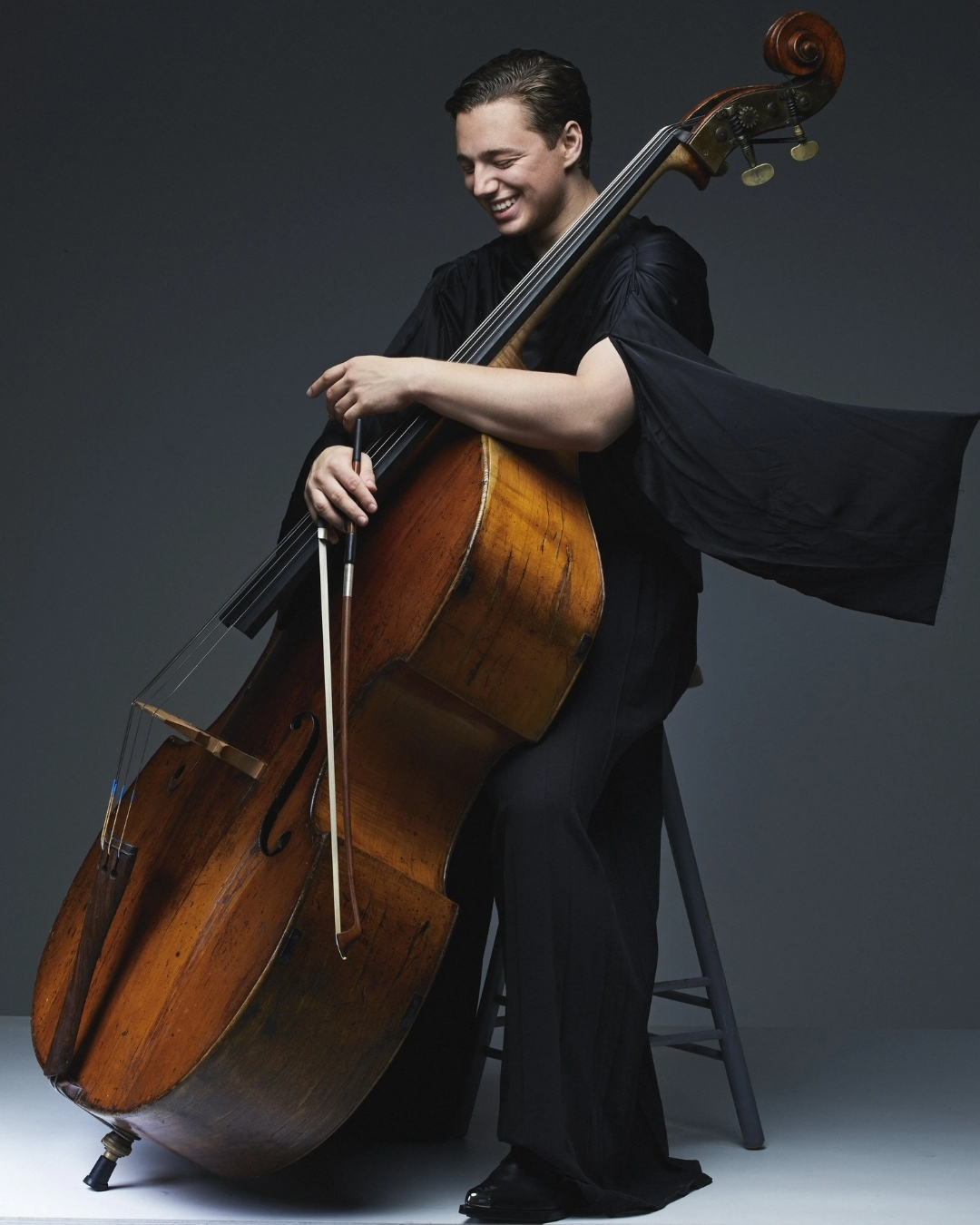
You chose to study with a cellist rather than follow a conventional path. What has that opened up in your playing?
We focus on the music, not the perceived limits of the instrument.
Studying with Louise Hopkins felt natural because neither of us is interested in accepting those limits.
We approach repertoire through phrasing, expression, color, and artistic intention rather than the technical traditions of the double bass.
You often bring music written for other instruments to the double bass. What draws you to that?
I’m fascinated by familiar music heard through an unfamiliar voice. The double bass has an extraordinary range of colors and an intimacy that people don’t always associate with it.
Transcribing Mozart, Rachmaninoff, or Schumann lets me expand the repertoire while offering a different perspective on music we think we already know.
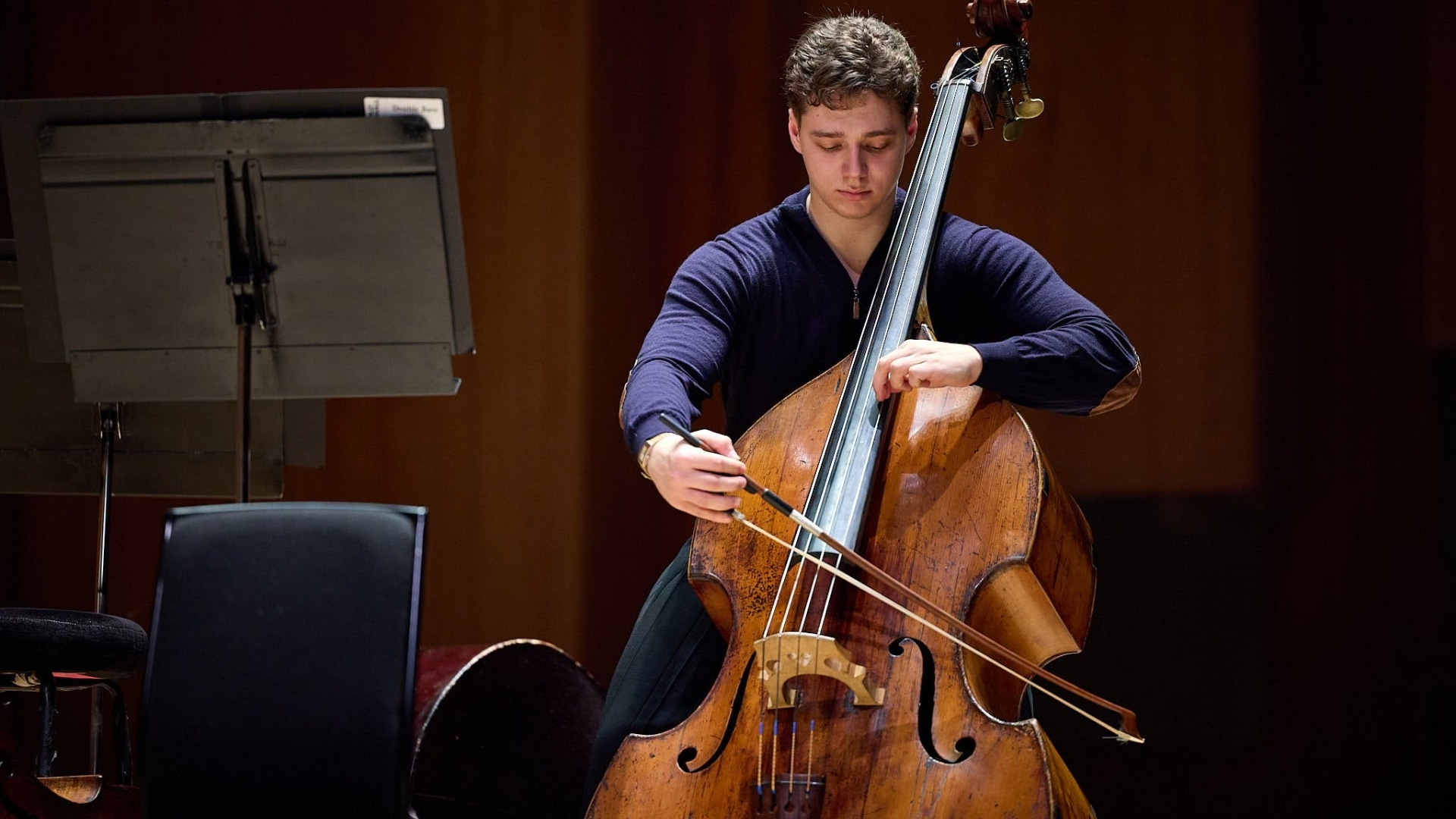
What have you learned about building a life in music?
There is no single prescribed route. A career in music is built just as much on curiosity, resilience, and human relationships as on what happens onstage. Learning to trust my own instincts, artistically and professionally, has been one of the most important lessons.
Register for the chance to be invited to apply to The Global Artist Diploma